
“Just ok isn’t ok.”
Originally published on LinkedIn, February 10, 2026
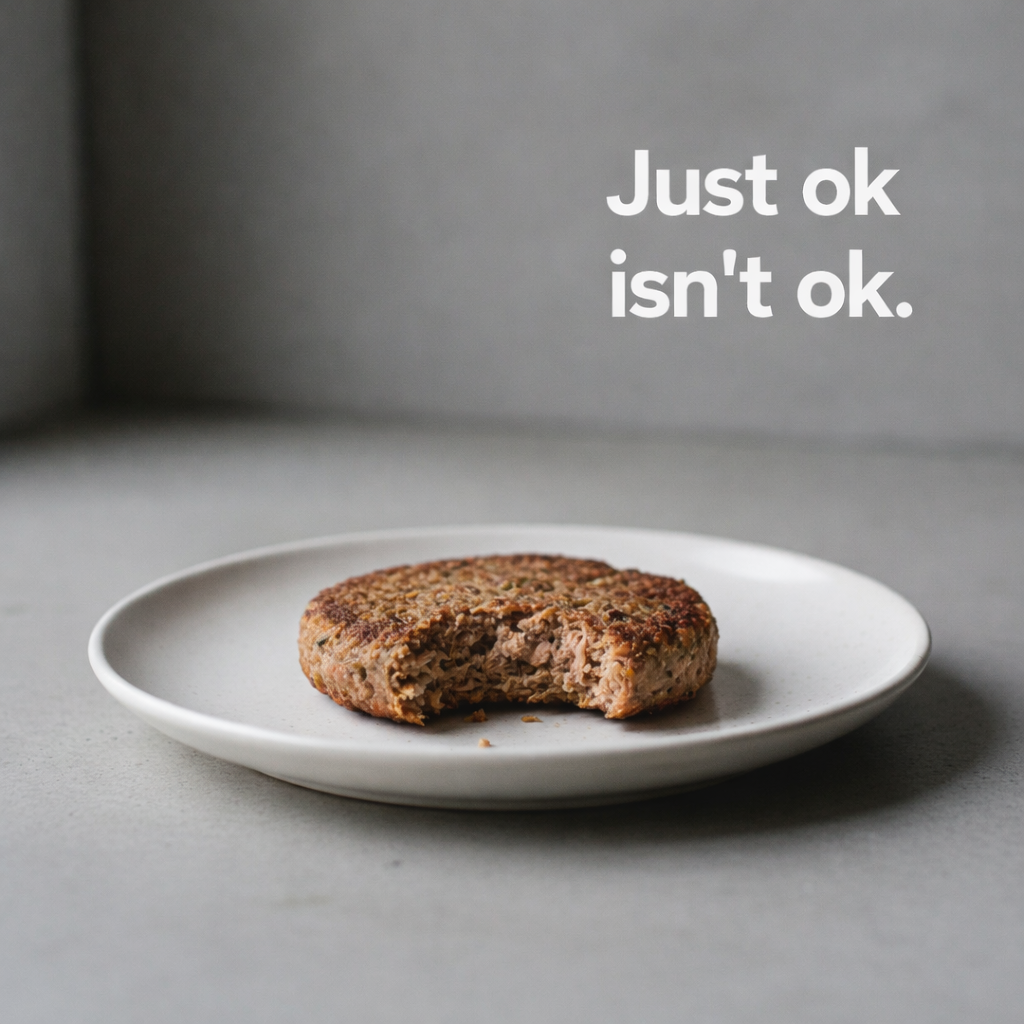
That line from the Rinvoq commercials has been stuck in my head, and it maps surprisingly well to Food Systems in Transition.
A lot of alternative protein products reached the market as MVPs. That was necessary. MVPs prove feasibility and attract early adopters.
But in food, just ok has a very short shelf life.
Once novelty fades, consumers make the same decision they always do:
😋 Does this taste good?
🤔 Does it feel right?
🔁 Would I buy it again?
That’s where many products have stalled.
Beyond Meat is a good example. Swapping coconut oil for avocado oil may have marginally improved the health profile, but it didn’t materially improve taste or texture. For mainstream consumers, that’s not an upgrade that earns repeat purchases.
We’ve seen similar patterns elsewhere:
• Plant-based burgers that nailed the story but not the mouthfeel
• Fermentation-enabled products that launched before sensory performance was truly competitive
• Even outside food – early EVs that only scaled once range, charging speed, and reliability caught up
The more optimistic story is what comes next.
Cultured meat and next-generation alternative proteins are still early, but they’re also learning faster. Better fats. Better structure. Better control over texture and flavor. That’s where the real inflection will come – not from being acceptable, but from being clearly better.
• MVPs validate direction.
• They don’t sustain adoption.
In systems transitions, momentum comes from relentless product improvement on the dimensions people actually care about.
➤ Just ok isn’t ok – especially when you’re asking people to change how they eat.
So here’s the harder question:
❔ Are alternative protein companies optimizing to launch… or to win repeat customers?
That’s where I think the next chapter gets written.